Leadership in a Hybrid Human-AI Workplace: How AI Subagents are Changing the Leadership Game
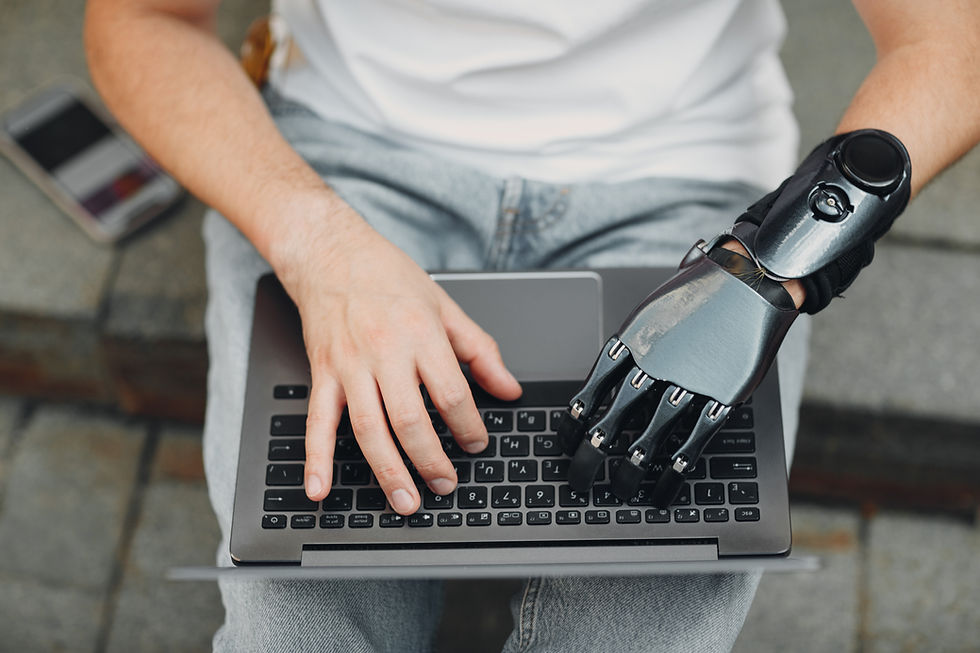
Picture the morning staff meeting in 2030: seated around the virtual table are four human leaders and three specialized AI sub-agents, each assigned distinct responsibilities within a single project workflow. This isn’t science fiction—it’s the emerging reality of workforce management. As AI transitions from a background utility tool to an active team member, the traditional hierarchy of supervision is giving way to orchestration. To succeed in this new paradigm, leaders have to learn to lead not just people, but the space where human ingenuity and software autonomy intersect. For HR leaders, the challenge ahead is clear: we must equip operational managers and teams with the tools, mindset, and ethical guardrails needed to build thriving, high-performing hybrid teams.
We live in an extraordinary transition era: we’re the pioneers learning to incorporate synthetic intelligence into our daily work life and the last generation in history who will ever know what it felt like to work without it. As artificial intelligence evolves from simple productivity tools into autonomous sub-agents working alongside our teams, the modern leadership playbook is officially being rewritten.
Leading through 2030 won't be about micromanaging workflows or mastering complex technical code; it will be about mastering orchestration. Tomorrow’s most effective managers will act like conductors—guiding hybrid teams where human direct reports provide critical thinking, emotional intelligence, and context, while AI sub-agents handle data synthesis and execution at scale. To prepare for this shift, organizations and HR professionals must start building the roadmap today for an AI-augmented world. If this sounds scary or overwhelming, it isn't meant to be. . . But building your self-confidence in this space so that you can develop a healthy mindset is what this article is all about. Let’s walk through it together, knowing that we’ve got one another’s backs and no one will be left behind.
The Core Paradigm Shift: From Supervision to Orchestration
The fundamental nature of leadership is undergoing a quiet but seismic shift. We’re moving rapidly from an era of managing people performing siloed tasks to directing dynamic, blended teams of human talent and specialized AI sub-agents. By 2030, a manager’s value will still be measured by traditional span of control and team headcount, but “orchestration capacity” will likewise serve as a core measurement of a manager’s leadership capabilities—the ability to seamlessly integrate human empathy, critical judgment, and intuition with the speed and scale of autonomous software. For HR leaders and executives, navigating this transition requires a ground-up rethinking of leadership development, moving away from rigid command-and-control supervision toward a renewed model of workflow design, ethical governance, and collaborative human-machine synergy.
Traditional leadership frameworks were built on accountability hierarchies: manager - direct report task execution. In a hybrid human-AI environment, managers supervise outcomes generated through a tripartite partnership:
Manager (Intent and Strategy)
↓
Human Direct Report (Empathy and Nuance)
↓
AI Sub-Agent (Scale and Synthesis)
It’s this new third tier of AI sub-agents that extends leadership to a whole new level. Specifically, rather than managing task delegation among a group of four people, a single manager coordinates a blended team—for example, four core human strategists paired with specialized AI sub-agents (custom Gems or autonomous domain agents). Standard AI platforms like Google will help you create Gemini “Gems” that serve as sub-agents and that specialize in particular tasks at work. They’re fairly easy to create and can be “trained” in your particular line of business to perform tasks like policy and handbook Q&A, documentation assistance, difficult conversation simulators, pulse survey analysis, and the like.
Strategic Roadmap to 2030: Four Phases of Hybrid Human-AI Leadership
How can we reasonably expect to get there? It’s always easiest to start with an overview of how you might plan your own career development moving towards 2030 (an arbitrary date but one that will likely see much of this change reach fruition). Consider aligning your transition to full-scale hybrid human-AI management according to the following roadmap:
TIMELINE | STAGE | HR LEADERSHIP MILESTONES |
|
|
|
Phase 1: 2026 – 2027 | Accountable Integration | • Set simple oversight to ensure that team members always review, verify, and take ownership of any AI-generated work before it reaches clients or executives. • Establish clear guidelines that outline which tasks are best handled by people (like creative strategy, employee relations, and coaching) and which are appropriate for digital tools. • Shift performance evaluations away from "time spent at a desk" toward the quality, impact and overall value of the team's actual work output. |
Phase 2: 2027 – 2028 | Workforce Re-architecture | • Redesign job descriptions to incorporate AI skill acquisition and development. • Upskill managers in AI communication by teaching them how to write clear, detailed instructions for digital tools to get high-quality, reliable results every time. • Implement AI quality control standards at the team level. |
Phase 3: 2028 - 2029 | Autonomous Agent Integration | • Enable teams to hand off end-to-end administrative or analytical workflows to specialized AI assistants while humans review the final results. • Establish clear team guardrails regarding what types of routine tasks digital assistants are allowed to handle independently versus when human approval is strictly required. • Monitor team well-being and maintain strong human connection to ensure that increasing automation doesn't lead to screen fatigue or isolation among team members. |
Phase 4: 2030+ | The Adaptive Enterprise | • Build well-coordinated teams where people and digital tools communicate smoothly in real time, making day-to-day operations faster, more agile, and less burdened by routine administrative friction. • Transform HR from a traditional support function into strategic advisors who design high-performing workplaces by thoughtfully blending human capabilities with smart digital tools. |
Note that these steps and milestones aren’t all that intimidating. It almost feels like managers need to be trained on how to train administrative assistants or research assistants. Information needs to be shared, questions need to be answered, guardrails and expectations need to bet set, and errors or AI “hallucinations” need to be reported and tracked—especially when humans correct or amend decisions contrary to what the AI is advising. (You’ll always want to have a record of what’s known as “Human-in-the-Loop” interactions where you override AI recommendations to demonstrate your organization’s active engagement in decision-making so that no one can accuse you of relegating important matters to AI that could have potential adverse consequences on employees or job applicants).
HR Leadership Checklist: Building the Infrastructure
Okay, so where do we go from here? The idea of leading hybrid Human-AI teams may sound too much like Star Trek or Star Wars for your tastes. Don’t let the title fool you. And don’t be afraid of the exercises you’ll be going through over the next few years as AI incorporates itself into every aspect of our lives—work/home, private/public, and the like.
In fact, I’d recommend playing with this at home yourself. Personally, I’ve built “Gems” that help me with my (1) keynote speaking, (2) management training, and (3) executive coaching practices. So, rather than asking Google Gemini, ChatGPT, Claude, or other AI large language models to provide you with generic answers to your questions, you develop focused “agents” who get to know you, your writing and speaking style, and your approach to business solutions, for example. Over time as the software “learns” and gets to know you better, it provides bespoke responses that are custom-fit to your personality, writing style, and way of solving problems. It’s pretty cool, I have to admit.
Now, back to the workplace. . . To support managers in leading hybrid teams, HR leaders should prioritize the following structural adjustments:
Revisit Job Descriptions: Shift from static task lists to what will become known as “dynamic capability profiles” that outline where AI augments work and where human judgment is required.
Update Performance Appraisals: Evaluate leaders on “orchestration efficiency”—how effectively they leverage tools to drive growth and team capability—rather than mere activity.
Establish Clear Delegation Guidelines: Define clear criteria for which tasks can be fully automated, which require human oversight, and which must remain strictly human-driven (e.g., performance feedback, employee relations, workplace investigations, high-stakes decisions).
Foster Ongoing Experimentation: Reward managers who redesign workflows and share successful sub-agent prompts or processes across the enterprise.
In addition to these formal steps, keep the following practical guidelines in mind:
Provide “psychological safety” and AI anxiety management to your HR team and to operational leaders and staff members in your client areas.
Follow the ethical guidelines and AI governance standards established by your organization to ensure the technology is used as intended and does not violate the law or create some form of “adverse impact,” where a neutral employment practice or policy unintentionally harms or disproportionately excludes members of a protected group (such as based on race, sex, age, or religion) during hiring, promotions, training, or layoffs.
Establish cross-functional "AI Capability Networks" that identify early adopters and power users within each operational business unit, and train these informal leaders as "AI Champions" who can share prompt templates, highlight successful workflows, and provide peer-level coaching tailored to their specific department. (Talk about a great stretch assignment or special project!)
Protect and prioritize core "Human-Only" capabilities by training and building skills that must not atrophy as automation increases—such as critical thinking, nuanced negotiation, ethical judgment, and high-touch customer empathy.
Have some fun with this. Gamify it to the extent possible by instituting "AI Hackathons" and other exercises that give teams structured, permission-granted time to experiment with sub-agents on real-world pain points. Likewise, encouraging employees to build simple workflows or prompts in a risk-free setting turns intimidation into active curiosity and practical problem-solving.
The escalation from human to AI leadership is immense, akin to managing people after the invention of the wheel or the printing press. The world was never the same once we learned how to harness fire. We find ourselves now at such a pivotal moment in our evolution as a species. Yes, we have every right to worry about losing our jobs and/or career paths. We may not consider ourselves “techies,” or we may have people on our teams who demonstrate fierce resistance to this whole idea of hybrid Human-AI teams. Some may find it morally reprehensible to find machines doing the work of humans. Just remember to keep a healthy perspective and manage this in bite-sized chunks. Rome wasn't built in a day, and transitioning an organization to full Human-AI hybrid talent management will take time and occur in stages as outlined above.
AI will no doubt consume our time and energy moving forward in every aspect of our lives. Making it work for and through you as a business professional is what this is all about. And the best way to master this new technology will always be by giving it away to others. The universe knows that you cannot give away anything that you do not already have. Read that: By giving away greater understanding, support, guidance, and patience, you’ll build your people’s self-confidence. You’ll help them minimize their sense of fear. You might even teach them how to make their lives easier by “delegating” some of their most time-consuming and repetitive tasks to an AI subagent. Just remember the golden rules: no one will be left behind, we're all in this together, and we've all got one another’s backs. Little will do more to alleviate fear, drive encouragement, and demonstrate real results than fostering a stronger sense of community as we move toward the new leadership paradigms of the next decade.
____________________________________________
Excerpted from my books "101 Tough Conversations to Have with Employees" and "The First-Time Manager: Leading Through Crisis" (HarperCollins Leadership 2026, 2023).
Please feel free to subscribe to my blog for similar articles by clicking the “Subscribe to Blog” link and entering your email address here: https://www.paulfalconehr.com/blog.
For more information on my books, please visit my #HarperCollinsLeadership author page at https://www.harpercollinsleadership.com/catalog/paul-falcone/. You can likewise find my books on Amazon at amazon.com/author/paulfalcone and at Barnes & Noble at https://www.barnesandnoble.com/s/Paul%20Falcone.
For video snippets of my presentations, visit my YouTube channel at https://www.youtube.com/@paulfalconeHR.
PaulFalconeHR.com Consulting Services
Management & Leadership Training | Certified Executive Coaching |
International Keynote Speaking | HR Advisory Services |
Corporate Offsite Retreat Facilitation | Expert Witness Testimony |


Comments